HashmetaHashmetaHashmetaHashmeta
  • About
    • Corporate
  • Services
    • Consulting
    • Marketing
    • Technology
    • Ecosystem
    • Academy
  • Industries
    • Consumer
    • Travel
    • Education
    • Healthcare
    • Government
    • Technology
  • Capabilities
    • AI Marketing
    • Inbound Marketing
      • Search Engine Optimisation
      • Generative Engine Optimisation
      • Answer Engine Optimisation
    • Social Media Marketing
      • Xiaohongshu Marketing
      • Vibe Marketing
      • Influencer Marketing
    • Content Marketing
      • Custom Content
      • Sponsored Content
    • Digital Marketing
      • Creative Campaigns
      • Gamification
    • Web Design Development
      • E-Commerce Web Design and Web Development
      • Custom Web Development
      • Corporate Website Development
      • Website Maintenance
  • Insights
  • Blog
  • Contact
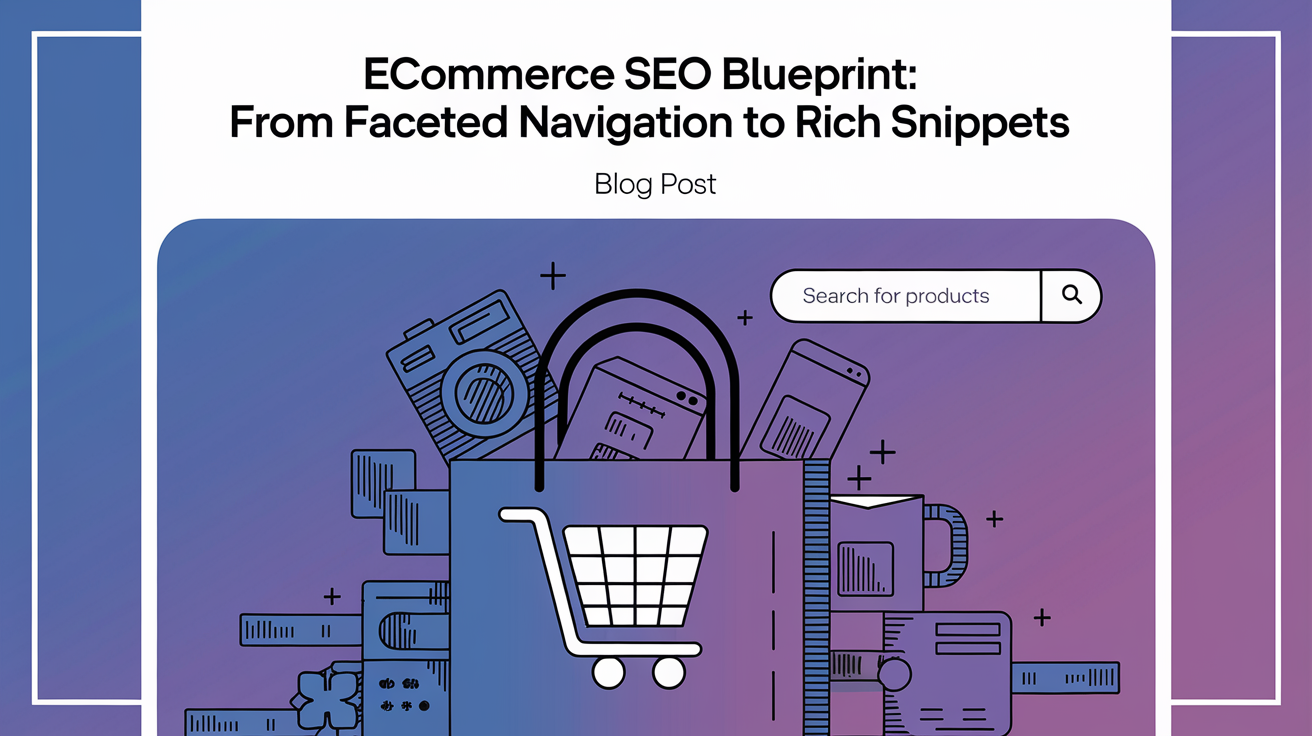
Blog banner titled 'eCommerce SEO Blueprint' with digital marketing icons

eCommerce SEO Blueprint: From Faceted Navigation to Rich Snippets

By Terrence Ngu | AI SEO | Comments are Closed | 5 June, 2025 | 0

Table of Contents

  • Introduction
  • Foundation: Technical SEO for eCommerce
    • Site Architecture and URL Structure
    • Crawlability and Indexability
    • Mobile Optimization
    • Page Speed Optimization
  • Mastering Faceted Navigation for SEO
    • Understanding Faceted Navigation
    • Identifying Faceted Navigation Issues
    • Optimizing Faceted Navigation
    • Creating SEO-Optimized Filter Pages
  • Implementing Rich Snippets for eCommerce
    • Structured Data Basics
    • Product Schema Markup Implementation
    • Review and Rating Schema
    • FAQ Schema for Product Pages
  • Measurement and Continuous Optimization
  • Conclusion


eCommerce SEO Blueprint: From Faceted Navigation to Rich Snippets

In the competitive world of eCommerce, visibility is everything. Search engine optimization (SEO) serves as the digital foundation that determines whether potential customers discover your products or remain hidden in the depths of search results. While basic SEO principles apply across industries, eCommerce presents unique challenges that demand specialized tactics.

At Hashmeta, we’ve guided over 1,000 brands through the complexities of eCommerce SEO, transforming their digital presence with our AI-powered SEO services and data-driven strategies. What we’ve discovered is that technical SEO elements—particularly faceted navigation and rich snippets—often represent the difference between thriving online stores and those struggling to gain traction.

This comprehensive blueprint will guide you through implementing a complete eCommerce SEO strategy—from optimizing your technical foundation to mastering faceted navigation and implementing rich snippets that drive clicks. Whether you’re ready to overhaul your entire approach or seeking targeted improvements to specific elements, this guide provides the actionable insights you need to elevate your eCommerce SEO performance.

eCommerce SEO Blueprint

From Technical Foundations to Rich Snippets

Master the complete eCommerce SEO strategy with this actionable blueprint from Hashmeta – tested and refined across 1,000+ brands.

Technical Foundation

  • Implement pyramid site architecture with logical URL structures
  • Configure robots.txt to guide crawlers efficiently
  • Optimize for mobile with responsive design
  • Improve page speed through image optimization and lazy loading

Faceted Navigation

  • Use canonical tags to manage duplicate content
  • Apply noindex tags to low-value filter combinations
  • Create SEO landing pages from high-value filters
  • Implement JavaScript for non-essential filters (sort, view)

Rich Snippets

  • Implement Product schema with JSON-LD
  • Add Review schema to display star ratings (35% CTR increase)
  • Use FAQ schema on product pages for expanded SERP presence
  • Maintain structured data accuracy across your catalog

Implementation Roadmap

Phase 1

Fix technical foundation and site architecture

Phase 2

Optimize faceted navigation and create SEO landing pages

Phase 3

Implement structured data and measure performance

Key Metrics to Track

Measure success with these critical indicators

Organic Visibility
  • Keyword rankings
  • Organic traffic
  • SERP CTR
Technical Health
  • Crawl stats
  • Index coverage
  • Schema validation
Business Impact
  • Conversion rates
  • Average order value
  • Organic revenue

Elevate your eCommerce SEO with Hashmeta’s comprehensive digital marketing expertise. Our team of 50+ specialists has supported over 1,000 brands with data-driven strategies.

Contact Hashmeta to discuss how we can implement these strategies for your brand.

Foundation: Technical SEO for eCommerce

Before diving into specialized techniques like faceted navigation and rich snippets, it’s essential to ensure your eCommerce site’s technical foundation is solid. Without these fundamentals in place, even the most advanced optimization tactics will deliver limited results.

Site Architecture and URL Structure

eCommerce sites typically contain thousands of pages across multiple categories and product types. A logical, hierarchical site structure helps both users and search engines navigate this complexity efficiently.

Your site architecture should follow a pyramid structure: homepage at the top, followed by main category pages, subcategory pages, and finally, individual product pages. This hierarchy should be reflected in your URL structure:

example.com/category/subcategory/product-name

This organized approach helps search engines understand the relationship between pages and distribute ranking power effectively throughout your site. Additionally, a clean URL structure helps users understand where they are within your site, improving user experience and potentially increasing conversions.

Crawlability and Indexability

Search engine crawlers need to efficiently access and index your eCommerce site’s content. Several factors can impact crawlability:

Robot.txt file management: Configure your robots.txt file to guide search engines on which pages to crawl and which to ignore. For eCommerce sites, this typically means allowing access to product and category pages while blocking internal search results, checkout pages, and user accounts.

XML sitemaps: Create comprehensive XML sitemaps that include all important product and category pages. Large eCommerce sites should consider splitting sitemaps by category or section to ensure all products get indexed.

Internal linking: Implement a robust internal linking structure that connects related products and categories. This helps distribute link equity and ensures search engines discover all your pages.

Mobile Optimization

With mobile commerce accounting for an increasingly large percentage of online sales, mobile optimization is no longer optional. Google’s mobile-first indexing means your site’s mobile version determines your search rankings.

Key mobile optimization factors include:

Responsive design: Ensure your site automatically adjusts to different screen sizes.

Touch-friendly navigation: Make buttons and links easy to tap without zooming.

Simplified checkout process: Optimize forms and payment processes for mobile users.

At Hashmeta’s SEO agency, we regularly audit mobile performance as part of our comprehensive approach, identifying common issues that can affect both rankings and user experience.

Page Speed Optimization

Page speed affects both search rankings and conversion rates. eCommerce sites face particular challenges with page speed due to product images, complex functionality, and third-party integrations.

To optimize page speed:

Optimize images: Compress product images without sacrificing quality using next-gen formats like WebP.

Implement lazy loading: Load images only as users scroll to them, particularly useful for category pages with many products.

Minimize HTTP requests: Combine and minify CSS and JavaScript files.

Leverage browser caching: Set appropriate cache lifetimes for static resources.

Consider a CDN: Content Delivery Networks can significantly improve load times, especially for international customers.

Our AI SEO tools can automatically identify page speed issues and prioritize fixes based on their impact on conversion rates.

Mastering Faceted Navigation for SEO

Faceted navigation represents one of the most powerful yet challenging aspects of eCommerce SEO. When implemented correctly, it improves user experience and creates valuable SEO opportunities. When mismanaged, it can create duplicate content issues and waste crawl budget.

Understanding Faceted Navigation

Faceted navigation allows users to filter products by multiple criteria simultaneously—such as size, color, price range, brand, and features. Unlike basic category filtering, faceted navigation creates combinations of filters, allowing for highly specific product searching.

From an SEO perspective, understanding the difference between standard filters and faceted navigation is crucial:

Standard filters: Apply one filter at a time, resetting previous selections.

Faceted navigation: Allows users to layer multiple filters simultaneously, creating unique combinations.

This distinction matters because faceted navigation generates unique URLs for each filter combination. On large eCommerce sites, this can create thousands or even millions of URL combinations, potentially causing serious SEO problems if not managed properly.

Identifying Faceted Navigation Issues

Before optimizing faceted navigation, identify any existing issues affecting your site’s SEO performance. Common indicators include:

Crawl inefficiency: Check Google Search Console’s Crawl Stats report to see if Google is wasting resources on faceted URLs.

Index bloat: Examine whether Google is indexing too many similar filter pages, diluting your site’s ranking potential.

Duplicate content: Look for nearly identical pages that differ only by minor filter parameters.

To identify these issues:

First, determine your faceted navigation URL patterns. Most eCommerce platforms add parameters to URLs when filters are applied:

example.com/shoes?color=red&size=10&brand=nike

Next, check Google Search Console’s Crawl Stats report and Coverage reports to see how many of these URLs Google is crawling and indexing. A high number of crawled but not indexed faceted URLs indicates crawl budget waste.

Optimizing Faceted Navigation

After identifying issues, implement a strategic approach to faceted navigation that balances user experience with SEO requirements. Here are key strategies:

1. Use canonical tags strategically

Implement self-referencing canonical tags on main category pages and high-value filter combinations. For low-value filter combinations, set canonical tags to point to the parent category page.

For example, if you sell shoes, you might set:

– Self-referencing canonical on example.com/shoes (main category page)

– Self-referencing canonical on example.com/shoes?brand=nike (high-value filter)

– Canonical pointing to example.com/shoes from example.com/shoes?color=red&size=7&sort=price-asc (low-value combination)

2. Implement robots directives

Use robots meta tags to control how search engines handle filtered pages:

– noindex: Prevents low-value filter combinations from appearing in search results

– nofollow: Prevents link equity from flowing through certain filter links

3. Optimize robots.txt

For very large sites with thousands of filter combinations, consider blocking low-value parameters in robots.txt:

User-agent: *
Disallow: /*?sort=
Disallow: /*?view=

4. Use JavaScript for non-essential filters

Implement filters like “sort by” and “view as” using JavaScript without changing the URL, preventing unnecessary URL variations.

Our consulting team has implemented these solutions across numerous eCommerce platforms, delivering significant improvements in crawl efficiency and search visibility.

Creating SEO-Optimized Filter Pages

Beyond fixing technical issues, faceted navigation presents a significant opportunity: creating highly targeted landing pages from valuable filter combinations. These pages can rank for long-tail keywords with high conversion potential.

To identify filter combinations worth optimizing:

Analyze search demand: Use keyword research tools to identify popular product attribute combinations, such as “waterproof hiking boots for women” or “organic cotton bedding sets.”

Review internal search data: Examine what combinations users search for on your site.

Check competitive rankings: Identify what filtered pages your competitors rank for.

Once you’ve identified valuable combinations, transform these filter pages into optimized landing pages by:

Adding unique content: Create descriptive introductions specifically for these filter combinations.

Optimizing meta data: Write custom titles and descriptions that include relevant keywords.

Enhancing internal linking: Create direct links to these pages from relevant content.

Building the URL structure: Consider creating clean, keyword-rich URLs for top filter combinations instead of using parameters.

For example, instead of example.com/shoes?gender=women&type=running, create example.com/womens-running-shoes.

Through our content marketing approaches, we’ve helped clients develop compelling content for these filtered pages that serves both users and search engines effectively.

Implementing Rich Snippets for eCommerce

Rich snippets represent another technical SEO opportunity that can dramatically improve your eCommerce site’s visibility and click-through rates. By implementing structured data, you can help search engines understand your content and display enhanced results in SERPs.

Structured Data Basics

Structured data is a standardized format for providing information about a page and classifying its content. For eCommerce sites, structured data enables search engines to display rich snippets—enhanced search results that include product information, ratings, pricing, availability, and more.

Google primarily uses schema.org vocabulary for structured data. For eCommerce, the most relevant schemas include:

– Product: For individual product pages

– Review: For product and store reviews

– BreadcrumbList: For showing site navigation hierarchies

– FAQ: For product pages with frequently asked questions

– Offer: For pricing and availability information

Structured data can be implemented using three formats: JSON-LD (recommended by Google), Microdata, and RDFa. JSON-LD is generally preferred as it doesn’t require modifying your HTML markup and can be implemented through tag management systems.

Product Schema Markup Implementation

Product schema is the cornerstone of eCommerce structured data. When implemented correctly, it enables rich product snippets that display:

– Product name

– Price

– Availability

– Aggregate rating

– Special offers

Here’s a basic example of product schema using JSON-LD:

 <script type="application/ld+json"> {   "@context": "https://schema.org/",   "@type": "Product",   "name": "Premium Wool Sweater",   "image": "https://example.com/sweater.jpg",   "description": "Luxurious wool sweater designed for comfort and warmth.",   "brand": {     "@type": "Brand",     "name": "Fashion Brand"   },   "offers": {     "@type": "Offer",     "url": "https://example.com/sweater",     "priceCurrency": "USD",     "price": "89.99",     "availability": "https://schema.org/InStock"   } } </script>

For eCommerce sites with thousands of products, implementing this markup at scale requires a systematic approach. Our marketing technology solutions can automate schema implementation across large product catalogs, ensuring consistency and completeness.

Review and Rating Schema

Product reviews significantly influence purchasing decisions, and review schema helps display star ratings directly in search results. This visual indicator can dramatically improve click-through rates for products with positive reviews.

Review schema can be implemented as part of product schema or separately. For product pages with multiple reviews, it’s important to aggregate ratings correctly:

 "aggregateRating": {   "@type": "AggregateRating",   "ratingValue": "4.5",   "reviewCount": "89" }

According to our data analysis at Hashmeta’s AI marketing division, products displaying star ratings in search results see an average CTR increase of 35% compared to those without ratings.

To maximize the impact of review schema:

– Ensure reviews are genuine and follow Google’s guidelines

– Implement a system to regularly update aggregate ratings

– Consider integrating with third-party review platforms for additional credibility

FAQ Schema for Product Pages

FAQ schema provides another opportunity to enhance your product pages’ search appearance. When implemented correctly, FAQ schema can display frequently asked questions directly in search results, increasing the space your listing occupies and providing valuable information to potential customers before they click.

For eCommerce product pages, FAQ content typically answers common questions about:

– Product features and specifications

– Sizing and fit information

– Care instructions

– Shipping and returns

Here’s an example of FAQ schema implementation:

 <script type="application/ld+json"> {   "@context": "https://schema.org",   "@type": "FAQPage",   "mainEntity": [{     "@type": "Question",     "name": "How should I care for this sweater?",     "acceptedAnswer": {       "@type": "Answer",       "text": "Hand wash in cold water with mild detergent. Lay flat to dry."     }   }, {     "@type": "Question",     "name": "What is your return policy?",     "acceptedAnswer": {       "@type": "Answer",       "text": "We offer free returns within 30 days of purchase."     }   }] } </script>

When combined with product and review schema, FAQ markup creates comprehensive rich snippets that dominate search results and provide maximum information to potential customers.

Through our SEO service in Singapore, we’ve helped numerous eCommerce clients implement this holistic approach to structured data, resulting in significant improvements in both visibility and conversion rates.

Measurement and Continuous Optimization

Implementing technical SEO improvements is just the beginning. To maximize results, you need to measure performance and continuously optimize based on data.

Key metrics to track for eCommerce SEO include:

Organic visibility metrics:

– Rankings for target keywords

– Organic traffic to category and product pages

– Impressions and click-through rates in Google Search Console

Technical health metrics:

– Crawl stats and coverage issues

– Index coverage

– Mobile usability

– Page speed scores

– Structured data validation

Business metrics:

– Conversion rates from organic traffic

– Average order value from organic visitors

– Revenue attributed to organic search

Establish a regular cadence for reviewing these metrics and identifying opportunities for improvement. As search algorithms and user behaviors evolve, your SEO strategy should adapt accordingly.

Consider implementing a testing framework for SEO changes, particularly for high-value pages. A/B testing different approaches to faceted navigation or structured data implementation can reveal which strategies drive the best results for your specific business.

At Hashmeta, our SEO consultants help clients establish these measurement frameworks and provide ongoing optimization support, ensuring continuous improvement in search performance.

Conclusion

eCommerce SEO success begins with a solid technical foundation and is amplified through strategic implementation of specialized elements like faceted navigation and rich snippets. By following this blueprint, you can create an SEO strategy that not only improves visibility but also enhances user experience—ultimately driving more traffic, conversions, and revenue.

Remember that eCommerce SEO is both a science and an art. The science involves implementing technical best practices correctly, while the art lies in understanding your specific audience and customizing your approach to meet their needs.

As search engines continue to evolve, staying current with best practices becomes increasingly challenging. Working with an experienced AI marketing agency like Hashmeta can help you navigate these complexities and maintain a competitive edge.

Whether you’re looking to fix specific technical issues or implement a comprehensive eCommerce SEO strategy, the principles outlined in this blueprint provide a roadmap for sustainable organic growth. Start with the fundamentals, address technical challenges systematically, and continuously measure and optimize your approach based on performance data.

Ready to transform your eCommerce SEO strategy? Contact Hashmeta today to discuss how our team of over 50 specialists can help you implement these strategies and achieve your digital growth objectives.

Ready to Boost Your eCommerce SEO Performance?

Our team of specialists can help you implement a comprehensive eCommerce SEO strategy tailored to your business needs. From technical foundations to advanced structured data implementation, we provide end-to-end solutions that drive measurable results.
Contact Us Today

Don't forget to share this post!
No tags.

Related Post

  • Blog banner with 'Why Clinics Need SEO to Compete' title over healthcare-themed background

    Why Clinics Need SEO to Compete Against Large Healthcare Groups

    By Terrence Ngu | Comments are Closed

    Discover how independent clinics can leverage strategic SEO to compete with large healthcare groups, increase visibility, and attract new patients in an increasingly digital marketplace.

  • Blog banner with title 'How to Monetise SEO Through Authority Positioning: The Ultimate Guide'

    How to Monetise SEO Through Authority Positioning: The Ultimate Guide

    By Terrence Ngu | Comments are Closed

    Discover proven strategies to transform your SEO expertise into a revenue-generating asset through authority positioning, building trust and capturing high-value opportunities.

  • Banner with 'Enterprise SEO Services: The Complete Guide for Large Organizations' title on a modern, tech-themed background

    Enterprise SEO Services: The Complete Guide for Large Organizations

    By Terrence Ngu | Comments are Closed

    Discover how enterprise SEO services can transform your large organization’s digital presence with AI-powered solutions, scalable strategies, and measurable ROI frameworks.

  • Blog banner with title 'How AI-Powered Editors Enhance Topical Depth for Superior SEO Results' in bold font.

    How AI-Powered Editors Enhance Topical Depth for Superior SEO Results

    By Terrence Ngu | Comments are Closed

    Discover how AI-powered editors are revolutionizing content creation by improving topical depth, enhancing SERP rankings, and delivering more comprehensive content that satisfies user intent.

  • Banner titled 'How to Spot Over-Promising SEO Service Providers: 7 Red Flags to Watch For' with warning symbols.

    How to Spot Over-Promising SEO Service Providers: 7 Red Flags to Watch For

    By Terrence Ngu | Comments are Closed

    Learn how to identify unreliable SEO service providers who make unrealistic promises. Discover key red flags to watch for and how to select legitimate SEO partners that deliver real results.

Company

  • Our Story
  • Company Info
  • Academy
  • Technology
  • Team
  • Jobs
  • Blog
  • Press
  • Contact Us

Insights

  • Social Media Singapore
  • Social Media Malaysia
  • Media Landscape
  • SEO Singapore
  • Digital Marketing Campaigns
  • Xiaohongshu

Knowledge Base

  • Ecommerce SEO Guide
  • AI SEO Guide
  • SEO Glossary
  • Social Media Glossary

Industries

  • Consumer
  • Travel
  • Education
  • Healthcare
  • Government
  • Technology

Platforms

  • StarNgage
  • Skoolopedia
  • ShopperCliq
  • ShopperGoTravel

Tools

  • StarNgage AI
  • StarScout AI
  • LocalLead AI

Expertise

  • Local SEO
  • International SEO
  • Ecommerce SEO
  • SEO Services
  • SEO Consultancy
  • SEO Marketing
  • SEO Packages

Services

  • Consulting
  • Marketing
  • Technology
  • Ecosystem
  • Academy

Capabilities

  • XHS Marketing 小红书
  • Inbound Marketing
  • Content Marketing
  • Social Media Marketing
  • Influencer Marketing
  • Marketing Automation
  • Digital Marketing
  • Search Engine Optimisation
  • Generative Engine Optimisation
  • Chatbot Marketing
  • Vibe Marketing
  • Gamification
  • Website Design
  • Website Maintenance
  • Ecommerce Website Design

Next-Gen AI Expertise

  • AI Agency
  • AI Marketing Agency
  • AI SEO Agency
  • AI Consultancy

Contact

Hashmeta Singapore
30A Kallang Place
#11-08/09
Singapore 339213

Hashmeta Malaysia
Level 28, Mvs North Tower
Mid Valley Southkey,
No 1, Persiaran Southkey 1,
Southkey, 80150 Johor Bahru, Malaysia

[email protected]
Copyright © 2012 - 2025 Hashmeta Pte Ltd. All rights reserved. Privacy Policy | Terms
  • About
    • Corporate
  • Services
    • Consulting
    • Marketing
    • Technology
    • Ecosystem
    • Academy
  • Industries
    • Consumer
    • Travel
    • Education
    • Healthcare
    • Government
    • Technology
  • Capabilities
    • AI Marketing
    • Inbound Marketing
      • Search Engine Optimisation
      • Generative Engine Optimisation
      • Answer Engine Optimisation
    • Social Media Marketing
      • Xiaohongshu Marketing
      • Vibe Marketing
      • Influencer Marketing
    • Content Marketing
      • Custom Content
      • Sponsored Content
    • Digital Marketing
      • Creative Campaigns
      • Gamification
    • Web Design Development
      • E-Commerce Web Design and Web Development
      • Custom Web Development
      • Corporate Website Development
      • Website Maintenance
  • Insights
  • Blog
  • Contact
Hashmeta