- Introduction
- The Evolving Landscape of AI in Social Media
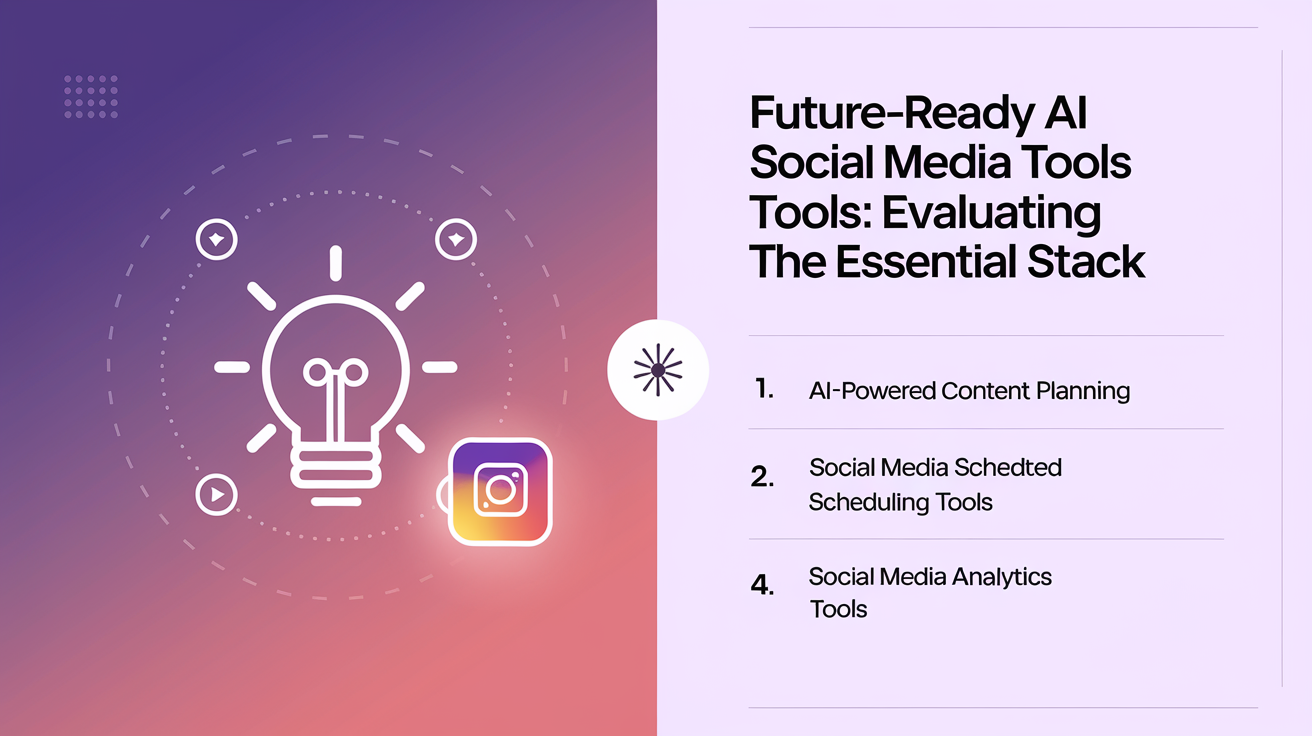
- Essential Components of the 2025 AI Social Media Stack
- Evaluating and Implementing AI Tools
- Preparing Your Organization for AI Adoption
- Conclusion
The social media landscape is undergoing a profound transformation, powered by artificial intelligence that’s evolving from basic automation to sophisticated decision-making systems. As we look ahead to 2025, forward-thinking brands are already evaluating the next generation of AI-powered tools that will define competitive advantage in the digital marketing space.
In an ecosystem where consumer attention is increasingly fragmented and platform algorithms grow more complex, the right AI social media stack will become not just an efficiency booster but a strategic necessity. According to recent projections, by 2025, over 80% of enterprise marketing activities will involve AI-augmented operations, representing a fundamental shift in how brands connect with audiences.
This comprehensive guide examines the critical components of a future-ready AI social media stack, helping marketing leaders and digital strategists evaluate the tools that will drive meaningful engagement, deliver measurable ROI, and create sustainable competitive advantage in an increasingly AI-driven marketing landscape.
The Evolving Landscape of AI in Social Media
The evolution of AI in social media has accelerated dramatically in recent years, transforming from simple chatbots and scheduling tools into sophisticated systems capable of generating creative content, predicting consumer behavior, and autonomously optimizing campaigns. This rapid advancement stems from breakthroughs in several key technologies:
Large Language Models (LLMs) have revolutionized content creation and audience interaction, enabling human-like text generation with contextual understanding. Computer Vision advances now allow AI to analyze, categorize, and even generate visual content with unprecedented accuracy. Meanwhile, predictive analytics capabilities have moved beyond basic trend analysis to complex, multi-variable forecasting that anticipates audience needs and behaviors.
The social media platforms themselves are increasingly AI-native, with algorithms that constantly evolve to optimize user experience and engagement. This creates both challenges and opportunities for brands seeking to maintain visibility and relevance. As AI marketing tools become more sophisticated, they provide brands with the capabilities to navigate these complex ecosystems effectively.
Forward-looking social media strategies now require a unified approach to AI adoption—not just implementing isolated tools but creating an integrated technology stack that enhances human creativity rather than replacing it. The most effective implementations combine AI capabilities with human strategic oversight, allowing marketers to focus on higher-level strategy while AI handles execution and optimization.
Essential Components of the 2025 AI Social Media Stack
As we approach 2025, several categories of AI tools will become essential components of an effective social media technology stack. Understanding these core capabilities now allows organizations to begin strategic implementation and gain competitive advantage.
Advanced Content Generation
The next generation of AI content tools goes far beyond basic text generation to create truly adaptive, platform-specific content at scale. These systems understand the nuances of different social channels and can automatically adjust tone, format, and messaging to match both platform requirements and brand guidelines.
Multimodal content generation—the ability to create text, images, video, and audio in an integrated way—represents a significant advancement. These tools allow brands to maintain consistent messaging across diverse content formats while dramatically reducing production time and costs. Some leading solutions can transform a single creative brief into dozens of platform-optimized assets in minutes rather than days.
Contextual adaptation capabilities enable content to respond dynamically to current events, trending topics, and user sentiment without requiring constant human intervention. This ensures brands remain relevant and responsive even as the social conversation evolves rapidly. Our work at Hashmeta’s content marketing division has shown that brands implementing advanced AI content generation typically see 40-60% increases in content output while maintaining or improving quality metrics.
Predictive Analytics and Audience Intelligence
The future of audience intelligence lies in predictive rather than reactive analytics. Next-generation tools provide unprecedented visibility into future audience behaviors, allowing marketers to anticipate needs and trends rather than simply responding to them.
Sentiment analysis is evolving from basic positive/negative classification to nuanced emotional intelligence that can detect subtle shifts in audience perception across platforms. This provides early warning of reputation issues and identifies emerging opportunities for engagement. Cross-platform audience insights deliver a unified view of audience behavior across the fragmented social landscape, enabling cohesive strategies that meet consumers where they are.
Behavioral prediction models now incorporate hundreds of variables to forecast with remarkable accuracy how different audience segments will respond to specific content types, messaging approaches, and calls to action. These capabilities, combined with AI-powered marketing services, allow brands to move from reactive to proactive engagement strategies.
Autonomous Campaign Optimization
Campaign management tools are evolving from rule-based systems to learning-based optimization engines that continuously improve performance without constant human intervention. These systems can dynamically reallocate resources across platforms, adjust messaging, and modify targeting parameters in response to real-time performance data.
Real-time bidding and budget allocation systems leverage machine learning to ensure optimal spend across platforms and campaigns, automatically shifting resources to the highest-performing channels and content. This capability becomes particularly valuable as social advertising environments grow more complex and competitive.
A/B testing at scale allows marketers to simultaneously test dozens of variations across multiple variables, rapidly identifying winning combinations that would be impossible to discover through traditional testing methods. This enables continuous performance improvement through automated experimentation.
The most sophisticated systems now incorporate AI SEO capabilities, ensuring that social content supports broader visibility goals across search and social ecosystems. This integrated approach recognizes that social signals increasingly influence search visibility and vice versa.
Integrated Omnichannel Management
The social media landscape continues to fragment, with emerging platforms capturing specific demographic niches and established platforms evolving in different directions. Managing this complexity requires integrated systems that provide unified control across platforms while respecting their unique characteristics.
Cross-platform content adaptation ensures that messaging remains consistent while being optimized for each channel’s specific requirements and audience expectations. This capability is particularly important for brands active on Western platforms as well as regional powerhouses like Xiaohongshu, where content norms and audience expectations differ significantly.
Unified analytics dashboards provide a comprehensive view of performance across channels, enabling marketers to identify synergies and optimize the entire social ecosystem rather than individual platforms in isolation. These systems increasingly incorporate AI-powered recommendations that identify specific opportunities for cross-platform optimization.
Automated compliance monitoring ensures that content meets regulatory requirements across jurisdictions, an increasingly important capability as global regulatory frameworks for digital marketing and data usage continue to evolve and diverge.
Evaluating and Implementing AI Tools
The process of evaluating and implementing AI social media tools requires a strategic approach that balances technological capabilities with organizational needs and readiness. Three critical considerations should guide this process:
Alignment with Business Objectives
AI implementations should begin with clear business objectives rather than technology capabilities. Successful evaluations start by identifying specific business outcomes—whether increasing engagement, improving conversion rates, enhancing customer service, or streamlining operations—and then assessing how AI tools can directly support these goals.
ROI modeling should incorporate both direct benefits (reduced costs, increased conversions) and indirect benefits (improved audience insights, enhanced brand perception, team productivity gains) to create a comprehensive business case. Organizations should also consider competitive positioning, as early adopters of advanced AI capabilities often gain significant market advantages that compound over time.
Working with specialized partners like digital marketing consultants can provide objective guidance in matching business requirements with technological capabilities, particularly for organizations without extensive in-house AI expertise.
Compatibility and Integration Capabilities
The most effective AI tools operate not as standalone solutions but as integrated components of a broader marketing technology ecosystem. Evaluation should prioritize solutions with robust API capabilities, pre-built integrations with existing tools, and compatibility with current workflows and processes.
Data flow and governance considerations are particularly important, as AI systems require access to organizational data to deliver value. Evaluation should include detailed assessment of how data will be accessed, processed, stored, and secured across the integrated system.
Scalability requirements should account not just for current needs but anticipated growth in both volume (more content, campaigns, and platforms) and complexity (new features, capabilities, and use cases). Solutions that offer modular expansion paths often provide more sustainable long-term value than all-in-one systems that may limit future flexibility.
Ethical Considerations and Compliance
As AI systems take on more autonomous decision-making in social media management, ethical considerations become increasingly important. Evaluation should include assessment of bias mitigation approaches, transparency mechanisms, and the level of human oversight maintained in critical processes.
International compliance capabilities are essential for global brands, as data protection regulations, disclosure requirements, and advertising guidelines vary significantly across regions. This is particularly important when leveraging influencer marketing programs, where regulatory requirements for disclosure and content guidelines continue to evolve rapidly.
Responsible AI use builds long-term brand value while reducing regulatory and reputational risks. Organizations should develop clear policies governing AI use in customer-facing applications, particularly for autonomous interactions and personalization features that may raise privacy concerns.
Preparing Your Organization for AI Adoption
Technology implementation represents only one aspect of successful AI adoption. Organizational readiness plays an equally important role in realizing the potential of advanced social media tools.
Skill development requirements should be identified early in the implementation process. Most organizations require a combination of technical skills (data science, prompt engineering), tactical marketing expertise, and strategic oversight capabilities. Marketing academies and training programs can help bridge these skill gaps through structured learning paths.
Workflow redesign often proves necessary to fully leverage AI capabilities. Organizations that simply layer AI onto existing processes typically achieve only incremental benefits, while those that redesign workflows to capitalize on AI strengths realize transformative outcomes. This may involve redistributing responsibilities, establishing new approval processes, and developing new performance metrics that reflect AI-enhanced capabilities.
Change management represents a critical success factor in AI implementation. Stakeholders must understand how AI tools will affect their roles, what new capabilities they enable, and how performance expectations may evolve. Organizations should develop comprehensive communication plans and provide adequate support resources during the transition period.
Technology partnership strategies provide access to specialized expertise and accelerate implementation timelines. Working with partners like marketing technology specialists can help organizations navigate the complex landscape of AI solutions, avoid common implementation pitfalls, and develop sustainable governance frameworks for ongoing AI operations.
Conclusion
The social media landscape of 2025 will be defined by AI capabilities that go far beyond today’s automation tools, offering unprecedented opportunities for personalization, optimization, and insight. Organizations that begin evaluating and implementing these technologies now will establish competitive advantages that become increasingly difficult for competitors to overcome.
Successful implementation requires a balanced approach that combines technological sophistication with strategic clarity and organizational readiness. The most effective AI social media stacks will not be those with the most advanced features but those that most closely align with business objectives, integrate seamlessly with existing processes, and receive proper organizational support.
As AI adoption accelerates across the marketing landscape, the differentiating factor will not be access to AI capabilities—which will become increasingly commoditized—but the strategic application of these capabilities to create distinctive brand experiences and drive measurable business results. Organizations that develop this strategic clarity now will be positioned for leadership in the AI-driven social media ecosystem of 2025 and beyond.
While the specific tools and platforms will continue to evolve, the foundational capabilities outlined in this article—advanced content generation, predictive analytics, autonomous optimization, and integrated management—represent the essential components of a future-ready social media stack. By beginning the evaluation and implementation process now, organizations can develop the expertise and infrastructure needed to fully capitalize on these capabilities as they mature.
Ready to Future-Proof Your Social Media Strategy?
Hashmeta’s team of AI and social media specialists can help you evaluate, select, and implement the right technology stack for your organization’s specific needs. Our consultative approach combines technical expertise with strategic insight to ensure your social media operations are positioned for success in the rapidly evolving digital landscape.