Table of Contents
- Introduction: The Schema-First Revolution
- Understanding Schema Markup: The Foundation of Rich Results
- The Business Case for Schema-First SEO
- Developing a Schema Strategy for Agency Clients
- Implementation: From Strategy to Structured Data
- Common Schema Types and Their Rich Result Potential
- Testing and Validation: Ensuring Schema Success
- Monitoring and Measuring Schema Performance
- The Future of Schema and AI-Powered Rich Results
- Conclusion: Leading the Rich Result Revolution
In the increasingly competitive digital landscape, the difference between SEO mediocrity and excellence often comes down to one critical factor: visibility in search results. But not just any visibility – the kind that captures attention, drives clicks, and ultimately converts users into customers. This is where schema markup and rich results have become the new competitive battleground for forward-thinking agencies and their clients.
Schema markup has evolved from an optional technical enhancement to a fundamental component of strategic SEO. At Hashmeta, we’ve observed that agencies adopting a schema-first approach consistently achieve superior SERP visibility, with rich results that effectively communicate value propositions before users even click through to a site.
This comprehensive guide will walk you through how leading agencies are leveraging structured data to dominate rich results, providing both the strategic framework and technical implementation details needed to transform your client’s search presence. From basic implementation to advanced schema strategies that leverage AI-powered insights, we’ll cover the complete spectrum of schema-first SEO practices that drive measurable results.
Understanding Schema Markup: The Foundation of Rich Results
Schema markup, at its core, is a semantic vocabulary of tags (or microdata) that you add to your HTML to improve how search engines read and represent your page in SERPs. Developed collaboratively by Google, Bing, Yahoo, and Yandex, schema.org provides a standardized format for structured data that helps search engines understand the context of your content.
While traditional SEO focuses on optimizing visible content, schema markup enhances the invisible layer of your website that communicates directly with search engines. This machine-readable data layer translates your content into a format that search algorithms can interpret with greater precision, enabling them to display more informative, visually appealing search results known as “rich results.”
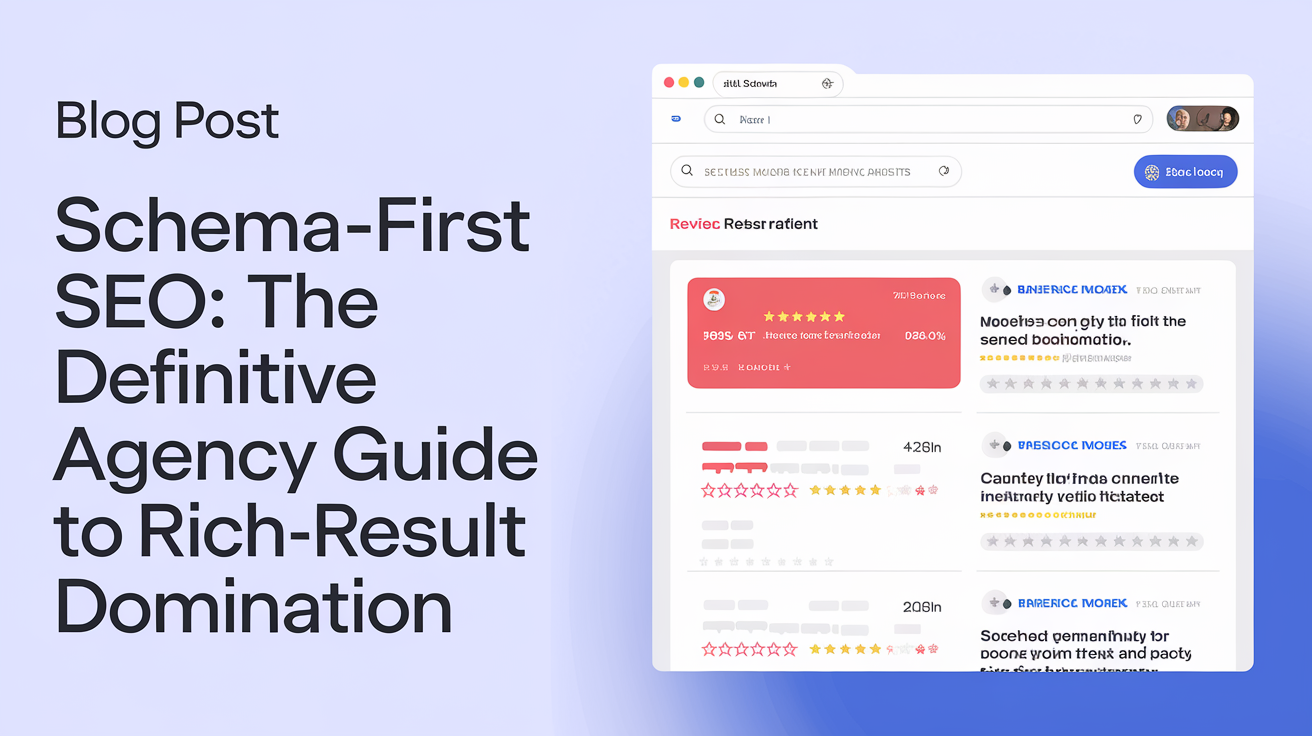
Rich results come in various forms, including featured snippets, knowledge panels, carousels, and other enhanced listings that stand out in search results. They typically include additional information beyond the standard title and description, such as ratings, prices, availability, and other relevant details that help users make informed decisions before clicking through to a site.
For agencies managing multiple client accounts across diverse industries, understanding the full spectrum of schema types and their applications is essential for creating customized structured data strategies that align with specific business objectives and audience needs.
The Business Case for Schema-First SEO
Adopting a schema-first approach to SEO isn’t just about technical compliance—it’s a strategic business decision that delivers measurable ROI for your agency and clients. Our data at Hashmeta’s SEO Agency shows that implementing comprehensive schema markup can transform search performance across multiple dimensions:
Enhanced visibility is perhaps the most immediate benefit. Rich results occupy more screen real estate and feature eye-catching elements that distinguish your clients from competitors. This visual dominance translates directly to improved click-through rates, with our client implementations showing CTR increases of 30-50% for properly schemed pages versus standard listings.
Beyond visibility, schema markup strengthens topical authority signals. By explicitly defining content relationships and entity connections, you help search engines build a more accurate understanding of your client’s expertise in specific domains. This enhanced relevance mapping leads to broader query coverage and more frequent appearances in high-intent searches.
From a user experience perspective, rich results pre-qualify traffic by displaying key information before the click. This means visitors arrive with clearer expectations and higher intent, leading to improved engagement metrics and conversion rates. For e-commerce clients, product-specific schema implementations showing price, availability, and reviews have delivered conversion improvements of up to 35% in our implementations.
Perhaps most compelling for agencies is how schema markup creates competitive differentiation and positions your SEO services at a more strategic level. When clients see their listings standing out with ratings, pricing, event information, or other enhanced features, it provides tangible evidence of your expertise that extends beyond traditional ranking reports.
Developing a Schema Strategy for Agency Clients
Successful schema implementation starts with strategic planning rather than technical execution. At Hashmeta’s consultancy, we approach schema strategy development through a systematic framework that ensures structured data directly supports business objectives:
Client Business Analysis
Begin by thoroughly understanding your client’s business model, revenue drivers, and digital conversion pathways. Different business types benefit from different schema priorities. E-commerce sites typically see highest returns from Product, Offer, and Review schemas, while service businesses may benefit more from LocalBusiness, Service, and FAQ implementations. Content publishers often prioritize Article, NewsArticle, and VideoObject schemas.
Analyze your client’s customer journey to identify critical touchpoints where enhanced search visibility could influence decision-making. For instance, a hotel chain might benefit most from schema types that highlight amenities and room availability during the research phase of the travel booking process.
Competitive Schema Audit
Before recommending schema types, analyze how competitors are currently using structured data. This competitive intelligence helps identify both opportunities and potential differentiators. Our AI SEO tools can rapidly assess competitor schema implementations and identify gaps in their structured data strategy.
This audit should note not only which schema types competitors are using, but also the quality and completeness of their implementation. Many competitors deploy basic schema without maximizing property utilization or creating logical entity relationships across their site architecture.
Schema Prioritization Matrix
With business and competitive insights in hand, develop a schema prioritization matrix that maps potential schema types against their implementation complexity and expected business impact. This framework helps sequence schema rollout for maximum initial returns while building toward comprehensive coverage.
We recommend starting with schema types that trigger rich results with high visibility and clear user benefits. This typically includes Product, FAQ, HowTo, and LocalBusiness schemas, which have well-established rich result formats with strong user engagement.
For enterprise clients, consider developing a schema taxonomy that standardizes implementation across large sites and establishes clear relationships between entities using appropriate properties. This architecture approach ensures search engines build an accurate knowledge graph of the client’s information ecosystem.
Implementation: From Strategy to Structured Data
Translating schema strategy into effective implementation requires both technical precision and scalable processes—particularly for agencies managing multiple client implementations. Our marketing technology experts recommend structuring your implementation approach based on client site architecture and internal resources.
Choosing an Implementation Method
Schema markup can be implemented through several methods, each with distinct advantages:
JSON-LD has become the preferred format for most implementations due to its clean separation from HTML content and ease of management. This JavaScript notation embeds schema directly in the page head or body without intermingling with visible content, making it easier to update and maintain.
Microdata integrates schema directly into HTML elements, which can be advantageous for ensuring markup remains synchronized with visible content. However, this tighter coupling makes maintenance more complex, especially when managing template-driven sites.
RDFa, while less commonly used, offers more flexibility for complex data relationships and can be preferred in specialized applications or when integrating with certain content management systems.
For most agency clients, we recommend JSON-LD implementation due to its maintenance advantages and Google’s stated preference for this format. Our implementation typically follows a template-based approach that standardizes schema structures while allowing for dynamic content insertion.
Implementation Architectures
The technical architecture of your schema implementation should align with client resources and site complexity:
CMS Plugin/Extension: For clients using common CMS platforms like WordPress, Shopify, or Magento, specialized extensions can provide foundational schema implementation. These solutions offer good coverage for standard schema types but may require customization for advanced implementations.
GTM Integration: Google Tag Manager provides a flexible option for deploying schema markup without direct code changes. This approach works well for agencies with limited developer access but requires careful implementation to ensure dynamic content is accurately reflected.
Server-Side Integration: For enterprise clients, direct integration with backend systems enables the most comprehensive and dynamic schema implementation. This approach allows for real-time updates to structured data based on inventory, pricing, or other dynamic elements.
API-Driven Schema: For large-scale implementations, especially across multi-site architectures, consider developing a centralized schema API that serves structured data based on page context and content. This architecture supports consistent implementation while minimizing redundant markup.
At Hashmeta’s content marketing practice, we’ve developed a hybrid implementation approach that combines template-based foundations with custom schema enhancements for high-value pages. This balanced methodology delivers comprehensive coverage while focusing development resources on pages with the greatest rich result potential.
Common Schema Types and Their Rich Result Potential
Understanding the specific rich result opportunities associated with each schema type helps agencies target implementations that deliver maximum visibility. Here’s an overview of high-impact schema types and their search presentation benefits:
LocalBusiness Schema
For clients with physical locations, LocalBusiness schema (and its more specific subtypes like Restaurant, Store, etc.) provides essential structured data for local search visibility. When properly implemented with accurate NAP (Name, Address, Phone) information, operating hours, and location coordinates, this schema type supports enhanced business listings in local search results.
Enhanced features can include direct links to reservation systems, service menus, and special offers. Our AI Local Business Discovery platform leverages comprehensive LocalBusiness schema to significantly improve client visibility in location-based searches.
Product Schema
For e-commerce clients, Product schema drives some of the most visually compelling rich results. Properly implemented Product markup can display pricing, availability, reviews, aggregate ratings, and even special offers directly in search results.
The key to effective Product schema lies in property completeness—including comprehensive information about variants, pricing, availability, and rich product descriptions. Product schema can also be enhanced with additional types like Offer, AggregateOffer, and Review to create more informative rich results.
FAQ Schema
FAQ schema represents one of the highest-value implementations for service businesses and informational content. This schema type creates expandable question/answer sections directly in search results, significantly increasing SERP real estate and providing immediate value to searchers.
Strategic implementation of FAQ schema involves identifying high-search-volume questions relevant to your client’s offerings and structuring content to provide concise, valuable answers. This not only improves visibility but also positions clients as authoritative sources within their industry.
Event Schema
For clients in the entertainment, education, or conference industries, Event schema creates rich calendar listings with dates, locations, and ticket availability information. These enhanced listings can appear in both standard search results and specialized event carousels.
Effective Event schema implementation includes comprehensive property utilization, including location details, performer/speaker information, ticket availability, and pricing data. For recurring events, proper implementation of the eventSchedule property ensures accurate representation of event series.
HowTo and Recipe Schema
Instructional content benefits tremendously from HowTo and Recipe schema implementations. These schema types create rich results with step-by-step instructions, images, duration information, and material/ingredient lists displayed directly in search results.
The visual nature of these rich results creates immediate user engagement and significantly enhances click-through rates for instructional content. Our AI Marketing solutions can automatically identify content suitable for these schema types and generate structured implementation templates.
Testing and Validation: Ensuring Schema Success
Thorough testing and validation are critical steps in the schema implementation process, particularly given the precision required for rich result eligibility. At Hashmeta, our SEO consultants follow a systematic validation approach to ensure schema implementations meet both technical requirements and business objectives:
Technical Validation
The foundation of schema validation begins with syntax and property verification. Google’s Rich Results Test and Schema.org’s Structured Data Testing Tool provide comprehensive validation of your implementation, flagging syntax errors and identifying missing required properties.
Beyond basic validation, we recommend testing implementations against Google’s specific rich result guidelines for each schema type. These guidelines often include requirements beyond the basic schema.org specifications, particularly for properties that trigger enhanced features.
For enterprise implementations, consider developing automated testing routines that validate schema across template variations and content types. These automated processes should verify both syntax correctness and the accuracy of dynamically-generated property values.
Quality Assessment
Technical compliance represents only the minimum threshold for schema effectiveness. Quality assessment evaluates whether your structured data accurately represents the content and provides maximum value to search engines and users.
Key quality factors include:
Property Completeness: While schema types have required and recommended properties, maximum rich result potential comes from comprehensive property implementation. For example, a basic Product schema might include only name, image, and price, but enhanced implementations would include detailed descriptions, multiple images, availability information, reviews, and variant options.
Entity Relationships: Advanced schema implementations establish relationships between entities across a site. For instance, connecting Product schema to Organization schema via the brand property, or linking Articles to Authors and then to the publishing Organization creates a more comprehensive entity map for search engines.
Content Alignment: Schema properties should precisely match visible content on the page. Discrepancies between structured data and visible content may be flagged as potential manipulation and can lead to rich result disqualification.
Rich Result Simulation
After technical validation, use Google’s Rich Results Test to preview how your structured data will appear in search results. This simulation helps identify potential display issues and ensures your implementation creates the expected visual enhancements.
For critical pages, consider creating test implementations of alternative schema approaches and comparing their rich result potential. This A/B testing approach helps identify the most effective structured data strategy for high-value content.
Monitoring and Measuring Schema Performance
Implementing schema is just the beginning—ongoing monitoring and measurement are essential to quantify performance improvements and identify optimization opportunities. Our ecosystem approach to digital marketing integrates schema performance into broader SEO analytics:
Rich Result Tracking
Google Search Console provides dedicated rich result reporting that tracks impression volume, click-through rates, and potential errors for pages with structured data. This reporting offers schema-specific insights that should be regularly monitored as part of SEO performance reviews.
Track rich result appearance across different search verticals and device types, as certain schema enhancements may perform differently in mobile versus desktop search contexts. For international clients, monitor performance variations across different search markets, as rich result display can vary by region.
Performance Attribution
To accurately measure schema impact, implement tracking methodologies that isolate the performance contribution of rich results. This can include:
Before/After Analysis: Compare key performance metrics (impressions, CTR, conversion rate) before and after schema implementation, controlling for seasonal factors and other variables.
A/B Testing: For larger sites, implement schema on a subset of eligible pages first and compare performance against similar unenhanced pages.
Search Appearance Segmentation: In Google Analytics, use the Search Console integration to segment traffic and conversion data based on rich result versus standard search appearance.
Our Marketing Academy trains client teams to properly attribute performance improvements to specific schema implementations, creating clearer ROI reporting for structured data investments.
Competitive Position Monitoring
Regular competitive analysis should track how your client’s rich result visibility compares to key competitors. Monitor changes in competitor schema implementation and rich result appearance to identify potential threats or new opportunities.
For strategic keyword sets, track rich result ownership—the percentage of targeted queries where your client achieves enhanced listings versus competitors. This competitive positioning metric helps quantify schema effectiveness beyond basic performance statistics.
The Future of Schema and AI-Powered Rich Results
As search engines continue to evolve toward more semantic understanding and AI-driven results, schema markup is becoming increasingly central to search visibility strategies. At Hashmeta’s AI marketing division, we’re actively preparing clients for several emerging trends:
Expanded Entity Understanding
Search engines are rapidly developing more sophisticated knowledge graphs that connect entities and concepts across the web. Comprehensive schema implementation helps position your clients’ digital properties as authoritative sources within these knowledge structures.
We anticipate increasing emphasis on entity relationships in schema implementation, extending beyond basic page-level markup to site-wide entity architectures that establish clear topical hierarchies and relationship networks. Organizations that implement these advanced entity frameworks will gain advantage in both traditional search and emerging AI-driven answer systems.
Multimodal Rich Results
Rich results are evolving beyond text to incorporate more visual and interactive elements. Video and audio content with proper schema markup is increasingly appearing in specialized rich results and gaining prominence in general search results.
Our implementation strategies now include comprehensive VideoObject, AudioObject, and ImageObject schema for multimedia content, positioning clients for visibility as search results become more visually dynamic. This approach also prepares for emerging voice and visual search capabilities, where structured data provides critical context.
AI-Generated Responses
With the rise of AI-powered search experiences like Google’s SGE (Search Generative Experience), schema markup plays an increasingly important role in helping AI systems accurately interpret and represent content in generated responses.
Properly implemented schema provides AI systems with confidence in content accuracy and relevance, increasing the likelihood of inclusion in generated answers. We’re adapting schema strategies to emphasize factual clarity and authoritative positioning that aligns with AI evaluation criteria.
Our AI-powered SEO services specifically optimize schema implementations to support both traditional rich results and emerging AI-generated content features, ensuring clients maintain visibility as search interfaces evolve.
Conclusion: Leading the Rich Result Revolution
Schema-first SEO represents a fundamental shift in how forward-thinking agencies approach search visibility. By prioritizing structured data implementation as a core strategy rather than a technical afterthought, agencies can deliver measurable performance improvements while positioning clients for future search innovations.
The rich result landscape continues to evolve, with search engines regularly introducing new schema-driven features and display options. Agencies that develop systematic approaches to schema strategy, implementation, testing, and performance measurement create sustainable competitive advantage for their clients while differentiating their own service offerings.
At Hashmeta, we’ve integrated schema-first methodologies across our technical SEO, content development, and performance analysis workflows. This integrated approach ensures structured data supports broader marketing objectives while maximizing search visibility through enhanced rich results.
The agencies that will dominate in the coming years are those that move beyond basic schema implementation to develop comprehensive structured data ecosystems that position their clients as authoritative entities within their respective industries. By mastering schema-first SEO now, you’ll lead your clients into the next generation of search visibility and performance.
Schema markup has evolved from a technical SEO tactic to a strategic imperative for agencies seeking to deliver maximum search visibility and engagement for their clients. By adopting the schema-first approach outlined in this guide, you’ll position both your agency and clients for rich result domination across competitive search landscapes.
The methodology presented here—from strategic planning through implementation, testing, and performance measurement—provides a comprehensive framework for transforming how your agency approaches structured data. This isn’t just about technical compliance; it’s about creating strategic advantage through enhanced search presence that drives measurable business results.
As search continues evolving toward more semantic understanding and AI-driven experiences, schema implementation becomes increasingly critical for maintaining visibility and authority. The agencies that master this discipline now will lead their clients through the rich result revolution and beyond.
Ready to Transform Your Clients’ Search Visibility?
Hashmeta’s team of schema specialists and AI marketing experts can help your agency develop and implement advanced schema strategies that drive rich result dominance for your clients.
Contact our team today to discuss how our schema-first approach can enhance your agency’s SEO services and deliver measurable visibility improvements for your client portfolio.