


Most Malaysian brands file Xiaohongshu (XHS, also called RedNote) under "China marketing" and move on. That filing is wrong: a commercially significant Mandarin-speaking audience inside Malaysia — locals, students, cross-border shoppers and visiting travellers — increasingly treats XHS as the place to research a purchase before making it. If your beauty clinic, café, boutique, showroom or tour business runs an English-only, Google-and-Instagram-only strategy, you are absent from a decision point your customers actually use — the gap an XHS Malaysia strategy is meant to close.
Who uses XHS in Malaysia? Four groups: Malaysian Chinese consumers (22.0% of citizens, DOSM 2026), students and young professionals, cross-border shoppers, and China-linked tourists (1,449,711 arrivals in Jan–June 2024, Tourism Malaysia). No official Malaysian user count exists.
The old assumption: XHS is for selling into mainland China.
The reality on the ground: it is also where a slice of your Malaysian market decides where to eat, what to buy and whom to trust — in Mandarin, before they ever reach your website.
Picture a Saturday in Kuala Lumpur. A customer wants a new café. She doesn't open Google Maps first — she types "best café in KL" into XHS in Chinese, scrolls a handful of notes with real photos and prices, saves two, and picks one. Your café ran a beautiful Instagram campaign last month. She never saw it. The competitor whose customers posted honest notes did the selling for them. That is the stake: not a missing follower count, but a missing seat at the moment of decision.
This is no longer a "should we post on another app" question. It is a channel-coverage question — the same way you would never run a Malaysian campaign in English only and call it complete. Multilingual Malaysia searches in Malay, English, Mandarin and Tamil. XHS is where a meaningful part of the Mandarin demand lives, and notes there keep surfacing in search long after a feed post dies. Visibility that compounds, in a language your current stack ignores.
Who Uses XHS in Malaysia?
Let's be precise about who you would actually reach, because "XHS users" is not one blob.
Malaysian Chinese consumers. Chinese Malaysians make up 22.0% of the citizen population, according to the Department of Statistics Malaysia (DOSM) Current Population Estimates 2026. That is roughly one in five citizens — a segment large enough to sustain entire categories on its own, from skincare to confinement centres to property. There is no current, linkable official count of XHS users within Malaysia, so treat any specific "millions of Malaysian users" number you see quoted as unverified; the defensible statement is qualitative — this is a substantial, Mandarin-first consumer community, and XHS is one of its native content habitats.
Students and young professionals. Malaysian Chinese students — at home and returning from studies abroad — grew up with Simplified Chinese content platforms. For this group, a product without XHS notes can feel unresearched, almost unvetted.
Cross-border shoppers. Malaysians who buy from Taobao and mainland sellers already live inside the Chinese-language commerce ecosystem. XHS notes are their pre-purchase reading; the habit carries over to local purchases.
China-linked tourists. Official Tourism Malaysia data records 1,449,711 tourist arrivals from China in January–June 2024 alone. In the travel campaigns we run, China-linked travellers commonly arrive with itineraries built from saved XHS notes — so for hotels, restaurants and attractions the question is whether notes about you exist in those searches.
Notice what these four groups share: they are not "the China market." Three of the four spend money in Malaysia, in ringgit, at businesses like yours. Dismissing XHS as a foreign app means dismissing your own customers' reading habits.
Does XHS Work Like a Search Engine?
Here is the structural difference most Malaysian marketers miss. Instagram is a feed: content surfaces, peaks, disappears. XHS is a feed plus a search engine, and the search half is where purchase intent concentrates. Users type queries — "best café in KL", "sensitive skin sunscreen Malaysia", "Penang hotel family" — and read notes the way they once read blog reviews. Peer-reviewed research on the platform, published in Frontiers in Psychology (2024), examines exactly this: how shared notes shape users' shopping behaviour. It does not quantify what share of users search before buying — no authoritative figure exists for Malaysia — but the direction of the evidence matches what practitioners see daily.
In our own XHS practice, we build around two mechanics that follow from this:
- Note SEO. XHS distribution is widely described by practitioners as driven by an engagement-weighted score — saves, comments, shares and follows counting for more than likes. Xiaohongshu does not publish the formula, so treat the weighting as directional, not documented. A note written around a real search query, in the language the searcher uses, can keep pulling qualified readers from search for months. In the accounts we manage, most feed-driven reach is spent within the first two to three days, while search-ranked notes keep pulling readers for months. One is an asset; the other is a broadcast.
- KOC seeding (种草). Key Opinion Consumers — ordinary users, not celebrities — publish authentic experience notes that populate those search results. When your prospective customer searches your category, the question is simply whether notes about you exist. Seeding is how you make sure they do.
Language strategy is the step most often skipped: a single translated caption serves neither segment well. Our practice splits it deliberately: Simplified Chinese optimisation aimed at mainland tourists and cross-border shoppers, versus a Traditional Chinese and Manglish mix that reads naturally to Malaysian locals — with native linguists writing for each segment.
A note on numbers
You will see confident XHS statistics circulating — user counts for Malaysia, daily-search percentages, global monthly actives. We could not verify current official sources for any of them, so this article does not repeat them. Judge the channel on verifiable population and tourism data, on peer-reviewed research direction, and on a small pilot you can measure yourself.
Research-Led Categories Fit First — Beauty, F&B, Fashion, Property, Tourism
Not every Malaysian business should rush onto XHS. Across the XHS work our Malaysia team runs, the strongest fit shares one trait: the customer researches before committing, and other people's experience outweighs the brand's own claims.
- Beauty and skincare — buyers compare ingredients, skin types and real before-and-after accounts. Notes are the format that comparison happens in.
- F&B — "where should we eat" is a search query with photos attached. A cluster of honest dining notes functions as a living review page you influence but don't fabricate.
- Fashion and retail — try-on notes, sizing honesty and styling context do what a product grid cannot.
- Property — high-ticket, long-consideration purchases where buyers hunt for area guides, showroom experiences and owner accounts in Mandarin. See how Malaysian property developers reach Mandarin-speaking buyers.
- Tourism and hospitality — itineraries are literally assembled from saved notes before arrival.
Where the fit is weaker: impulse commodities with no research phase, and purely Malay- or English-speaking audiences with no Mandarin-reading segment. Be honest about which side of that line your business sits on — a channel entered for the wrong reason burns budget and patience.
Saved Notes Beat Repurposed Instagram Posts — Here's Why
The most common failed XHS launch we see follows a script: take the Instagram grid, translate the captions, post, wait, conclude "XHS doesn't work in Malaysia." The content was never built for how the platform is used.
What converting content looks like instead:
- First-person experience, not brand polish. A note titled around a real query — what it cost, what surprised the writer, what they'd order again — reads as evidence. A studio product shot with a slogan reads as an ad and gets scrolled past.
- Written to be saved. In our measurement approach, saves and organic comments outrank likes as signals. A rising save rate means people are treating your note as a reference document — behaviour that precedes purchase. Likes are applause; saves are intent.
- Built for search longevity. Keyword-led titles and structure aim at the long tail of XHS search, not the short feed window — in the accounts we manage, most feed-driven reach is spent within the first two to three days.
- Livestream as the closing layer, not the opening move. Once notes have built familiarity, livestream commerce converts it — demonstrations, Q&A, offers in real time. Starting with livestream before any note presence is asking strangers to buy on the spot. We assess whether XHS livestream marketing is worth the investment separately.
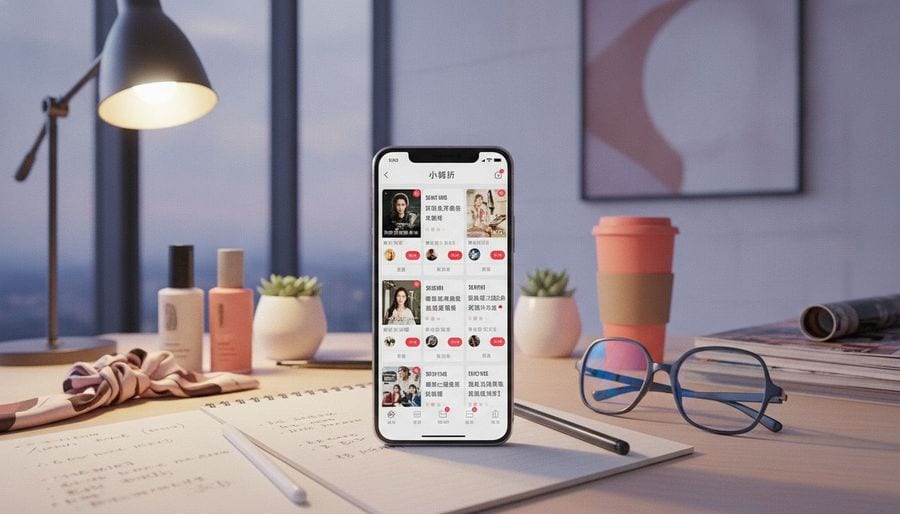
Authenticity here is not a vibe — it is a production decision. Native-language writers, real customers or seeded KOCs with genuine experience, honest specifics. It costs more thought than translation and less money than another quarter of ads that stop working the day you stop paying.
Start Small: A Pilot You Can Actually Measure
You do not need a six-figure commitment to test this thesis. You need a bounded pilot with honest instrumentation.
- 1
Set up the account properly — a verified brand presence with a Mandarin-capable profile, positioned for your category and your primary segment (locals, tourists, or both). Decide the language strategy before the first note, not after.
- 2
Pick one audience and one query cluster — for example, Malaysian Chinese diners searching your neighbourhood's food keywords. Ten to twenty well-targeted queries beat a hundred vague ones.
- 3
Run a KOC seeding pilot — authentic experience notes from real consumers, written natively for the segment, structured around those queries. Seed only with genuine product or service experience, disclose the commercial relationship in the note, and register brand collaborations through Xiaohongshu's official partnership channel — undisclosed paid notes risk removal and restricted distribution. This is the core spend; our KOC seeding practice recruits consumers who have genuinely used your product or visited your outlet.
- 4
Measure what predicts purchase — track where seeded notes rank inside XHS search for your target keywords, plus save and comment rates over time. Treat likes as vanity. Watch for enquiries, bookings and redemptions that mention notes.
Metric Where to read it What we watch for Decision In-app search rank for the target query cluster Manual XHS in-app searches for each query, logged weekly Seeded notes appearing on the first results page for the cluster's core queries Scale the clusters that rank; rewrite titles and structure for those that don't Save rate Saves divided by views, per note, in the account's note analytics Save rate rising across successive notes, not one outlier Repeat the formats that get saved; drop formats that only collect likes Organic comment rate Comments per note in the account's notifications, excluding replies you prompted Unprompted questions about price, location, availability or booking Answer in-note and turn recurring questions into new query-led notes Note-attributed enquiries A "where did you hear about us?" question at enquiry, booking or checkout Enquiries, bookings or redemptions that explicitly mention an XHS note Continue or scale only if attributed enquiries appear inside the agreed pilot window Any targets you set against these rows are illustrative planning assumptions for your own pilot, not published benchmarks.
- 5
Decide on evidence, not enthusiasm — after a defined pilot window, scale the query clusters that ranked and saved, and cut what didn't. No channel deserves blind faith, including this one.
On budget: pilot budgets are scoped to your category and query cluster — ask us for a written scope and quote before committing to a monthly tier. Whether a pilot makes sense at all depends on your margins and ticket size. And no honest agency will guarantee you rankings or a fixed return; what a pilot buys is evidence.
Key takeaways
- XHS in Malaysia reaches four spending segments — Malaysian Chinese consumers, students, cross-border shoppers and China-linked tourists — three of which buy locally, in ringgit.
- Chinese Malaysians are 22.0% of citizens (DOSM, 2026); specific Malaysian XHS user counts remain unverified, so judge the channel qualitatively and by pilot.
- XHS is search-first: note SEO and KOC seeding put you inside the queries customers type before deciding.
- Strongest fit: research-led categories — beauty, F&B, fashion, property, tourism.
- In our measurement approach, saves and in-app search rankings are the signals we treat as purchase intent; likes are not. Repurposed Instagram posts rarely earn either.
- Start with one segment, one query cluster, a seeded pilot and honest measurement — then scale on evidence.
Is Xiaohongshu only useful for reaching customers in mainland China?
No. In Malaysia it reaches Malaysian Chinese consumers — 22.0% of the citizen population per DOSM's 2026 estimates — plus students, cross-border shoppers and China-linked tourists, who numbered 1,449,711 arrivals in January–June 2024 according to Tourism Malaysia. Most of these segments spend money at Malaysian businesses.
How many people in Malaysia use Xiaohongshu?
There is no current, official, linkable count of Malaysian XHS users, so any precise figure you see quoted should be treated as unverified. What is verifiable is the size of the Mandarin-speaking citizen segment and the platform's documented role in shopping research; a small measured pilot is the reliable way to size the opportunity for your own category.
Do XHS users really search before they buy?
Peer-reviewed research in Frontiers in Psychology (2024) shows shared notes influence Xiaohongshu users' shopping behaviour, and practitioner experience consistently observes query-driven reading — "best café in KL" style searches — before purchase decisions. No authoritative percentage exists for Malaysia, which is why we recommend measuring saves and search rankings in your own pilot rather than trusting a headline statistic.
Which Malaysian businesses should not prioritise XHS?
Businesses whose customers don't research before buying, and those serving audiences with no Mandarin-reading segment, will usually see better returns elsewhere. XHS rewards research-led, experience-led categories — beauty, F&B, fashion, property and tourism — and punishes repurposed, translated advertising content.
What does a small XHS pilot cost in Malaysia?
Pilot budgets are scoped to your category and query cluster — ask us for a written scope and quote before committing to a monthly tier. The right starting budget depends on your margins and average ticket size.
The Seat at the Table Is Still Empty — Take It
Return to the Saturday café search. Every week that passes without notes about your business in XHS search is a week the decision happens without you — quietly, in Mandarin, in a channel your dashboard doesn't even track. The brands that move now aren't chasing a trend; they're covering a segment of Malaysian demand their competitors have chosen to ignore. Notes rank, saves accumulate, and the visibility keeps working after the campaign ends. That is a compounding asset, not an expense.
Hashmeta runs a dedicated Xiaohongshu (RedNote) marketing practice in Malaysia — KOL partnerships, KOC seeding, native-language content, note SEO, ads, livestream commerce and store setup — backed by our Singapore and Malaysia teams' search and Xiaohongshu practice, with senior strategists directing AI-accelerated execution and human judgement on every move. If you want to know whether your category's Mandarin-speaking customers are already searching for you, start with a conversation, not a contract.
Find out if your customers are already searching XHS
Tell us your category and your audience. We'll assess your XHS search presence and scope a pilot worth measuring — no guarantees, just evidence.
Talk to our teamSources
- Department of Statistics Malaysia (DOSM). Current Population Estimates, Malaysia, 2026. 2026. https://www.dosm.gov.my/uploads/release-content/file_20260730111137.pdf
- Tourism Malaysia. Fast Fact: Tourism Highlights January–June 2024. 2024. https://www.tourism.gov.my/files/uploads/fast-fact-tourism-highlights-jan-june-2024.pdf
- Frontiers in Psychology (via PubMed Central). Sales through note-sharing: influences on the shopping behavior of "Xiaohongshu" users. 2024. https://pmc.ncbi.nlm.nih.gov/articles/PMC12083460/